So you've just purchased a brand new guitar rig, a professional camera setup, or a high-spec computer for your creative business - and your accountant asks, "Is that a fixed asset?" You nod confidently, but somewhere in the back of your mind, you're not entirely sure what that actually means.
You're not alone. For creative professionals and small business owners across Penrith and greater Sydney, the language of accounting can feel about as welcoming as a technical rider for a stadium tour. But understanding what a fixed asset is - and how to treat it correctly - isn't just textbook knowledge. It directly shapes your tax obligations, your financial statements, and the long-term value of your business.
Get it wrong, and you could be missing legitimate deductions, filing inaccurate reports, or making capital decisions in the dark. Get it right, and you've got a powerful tool in your financial toolkit. Let's plug in and tune up.
A fixed asset is a tangible, long-lived physical asset that a business owns and uses in its operations for more than 12 months to generate income. The defining characteristic is that a fixed asset is not acquired for resale - it's acquired to do work within the business, day in, day out, over multiple financial years.
In financial reporting, fixed assets are commonly referred to as Property, Plant and Equipment (PP&E) and sit in the non-current assets section of your balance sheet. You may also hear them called capital assets, long-term assets, or non-current assets - all referring to the same thing.
Under AASB 116 (Property, Plant and Equipment) - the Australian Accounting Standards Board standard that governs this area - a fixed asset is recognised on the balance sheet when:
Key defining characteristics of a fixed asset include:
Fixed assets span a wide range of industries, but the category takes on a unique flavour for creative professionals. Beyond the standard stuff, creatives often have equipment that many accountants might not immediately clock as a fixed asset - but the ATO absolutely does.
Common fixed assets across Australian businesses include:
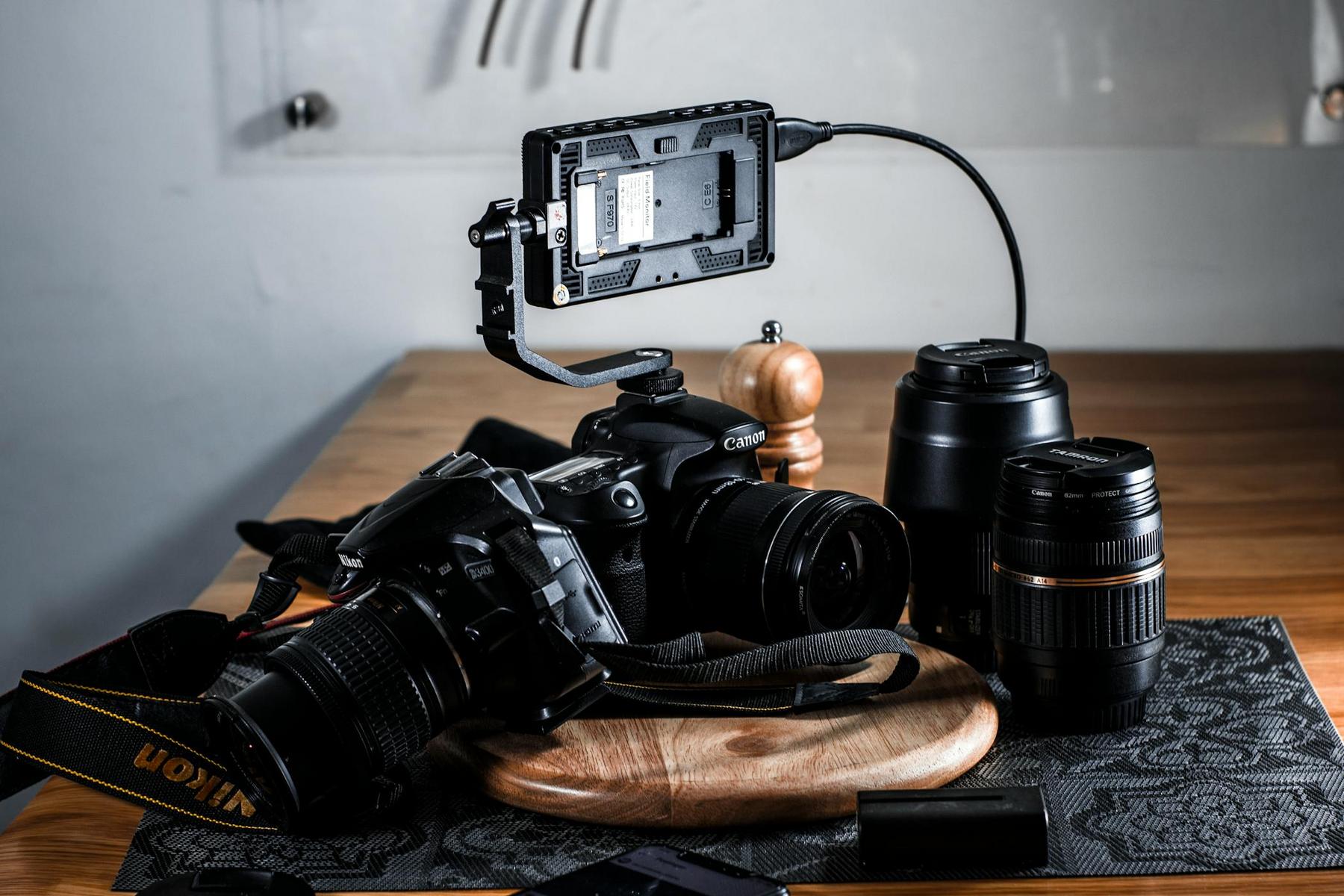
For creative professionals specifically, fixed assets often include:
The Australian Taxation Office prescribes specific effective lives for musical instruments, which directly determines how quickly the asset depreciates for tax purposes. For example, under ATO guidelines, stringed instruments carry a 10-year effective life, while electric keyboard instruments have a 5-year effective life. Associated portable equipment such as amplifiers and mixers carries a 6⅔-year effective life with a 30% diminishing value rate.
That vintage Les Paul on the wall might be going up in market value, but the ATO will still allow you to depreciate it - provided it's genuinely used in your income-producing trade.
When a fixed asset is acquired, it doesn't simply hit the profit and loss statement as an immediate expense. Instead, it's capitalised - recorded on the balance sheet at its full historical cost, which includes:
Over time, the value of most fixed assets declines through use, wear and tear, or obsolescence. This systematic reduction in value is called depreciation, and it's recorded as an expense on the income statement across the asset's useful life.
The resulting figure reported on the balance sheet is the net book value:
Net Book Value = Cost of Asset − Accumulated Depreciation
For example, if a piece of studio equipment is purchased for $100,000 and has accumulated $50,000 in depreciation over five years, its net book value is $50,000.
Under AASB 116, businesses can measure a fixed asset using either the cost model (historical cost less accumulated depreciation) or the revaluation model (fair value less accumulated depreciation). Whichever model is chosen must be applied consistently across an entire class of assets.
Depreciation is essentially the accounting system's way of matching the cost of a fixed asset to the period in which it generates economic benefit - spreading the cost across the asset's working life rather than hitting it all at once.
The ATO recognises two primary methods for tax depreciation in Australia:
This produces equal depreciation expense in each period.
Annual Depreciation = (Cost − Residual Value) ÷ Useful Life
For example: a $20,000 asset with a $5,000 residual value and a 5-year useful life generates $3,000 in annual depreciation.
This front-loads the depreciation, applying a fixed rate to the remaining book value each year. This produces higher deductions in early years and lower deductions as the asset ages. It's particularly common for vehicles and technology, which lose value rapidly in their early years. For assets acquired after 10 May 2006, the ATO applies a 200% declining balance rate.
Depreciation is calculated based on actual usage rather than time - ideal for manufacturing equipment or vehicles with highly variable use patterns.
Depreciation = (Units Produced This Period ÷ Total Life Units) × (Cost − Residual Value)
Under AASB 116, depreciation methods must be reviewed annually and adjusted if the consumption pattern of the asset changes.
This is one of the most important distinctions in business accounting, and it's worth understanding clearly. The line between the two determines where items sit on your balance sheet and how they're treated for tax purposes.
| Factor | Fixed Assets | Current Assets |
|---|---|---|
| Useful Life | More than 12 months | Less than 12 months |
| Liquidity | Low (illiquid) | High (liquid) |
| Conversion to Cash | Cannot be easily converted | Easily converted to cash |
| Depreciation | Yes (except land) | No |
| Purpose | Used in operations | Intended for sale or use |
| Balance Sheet Location | Non-current assets | Current assets |
| Examples | Buildings, vehicles, machinery | Cash, inventory, accounts receivable |
| Tax Treatment | Capital, subject to depreciation | Income/expense basis |
The short version: if it'll be consumed, sold, or converted to cash within 12 months, it's a current asset. If it's going to stick around and keep contributing to the business beyond that window, it's a fixed asset.
Understanding fixed assets isn't just about ticking compliance boxes - it carries real strategic weight.
Tax efficiency: Depreciation on fixed assets provides annual tax deductions, reducing your taxable income. For creative professionals, correctly identifying and depreciating instruments, equipment, and technology can make a meaningful difference at tax time. The ATO also provides immediate deduction rules for certain lower-value assets.
Access to finance: Tangible fixed assets can serve as collateral for business loans, improving your ability to access capital when you need to scale.
Operational insight: The fixed asset turnover ratio - calculated as net sales divided by average net fixed assets - measures how efficiently your business generates revenue from its long-term investments. A higher ratio signals stronger operational efficiency.
Investor and lender confidence: External stakeholders analyse the PP&E line item closely when assessing your business's production capacity and long-term financial health. Accurate reporting builds credibility.
Statutory compliance: Under both AASB 116 and ATO requirements, businesses must maintain detailed records of fixed asset acquisitions, depreciation methods, useful lives, and disposals. Falling short of these obligations can create problems during an audit or financial review.
When a fixed asset is disposed of, sold, or scrapped, any difference between the sale proceeds and the net book value creates either a gain (proceeds exceed book value) or a loss (proceeds fall short of book value) - both of which flow through the income statement and have tax implications.
Think of your fixed assets as the instruments in your business's rhythm section - they don't generate flashy headlines, but they keep the whole operation in time. Miss a beat with your asset register, depreciation schedules, or balance sheet classification, and the entire financial performance starts to sound off.
Whether you're a solo creative in Penrith managing a handful of depreciating assets or a growing production company navigating complex PP&E schedules, the fundamentals remain the same: identify your fixed assets accurately, choose the right depreciation method, stay compliant with AASB 116 and ATO requirements, and review your asset register annually.
Getting this right isn't just about compliance - it's about building a business that's financially transparent, tax-efficient, and positioned for long-term growth.
Ready to crank your finances up to 11? Let's chat about how we can amplify your profits and simplify your paperwork – contact us today.
Sign up to receive relevant advice for your business.