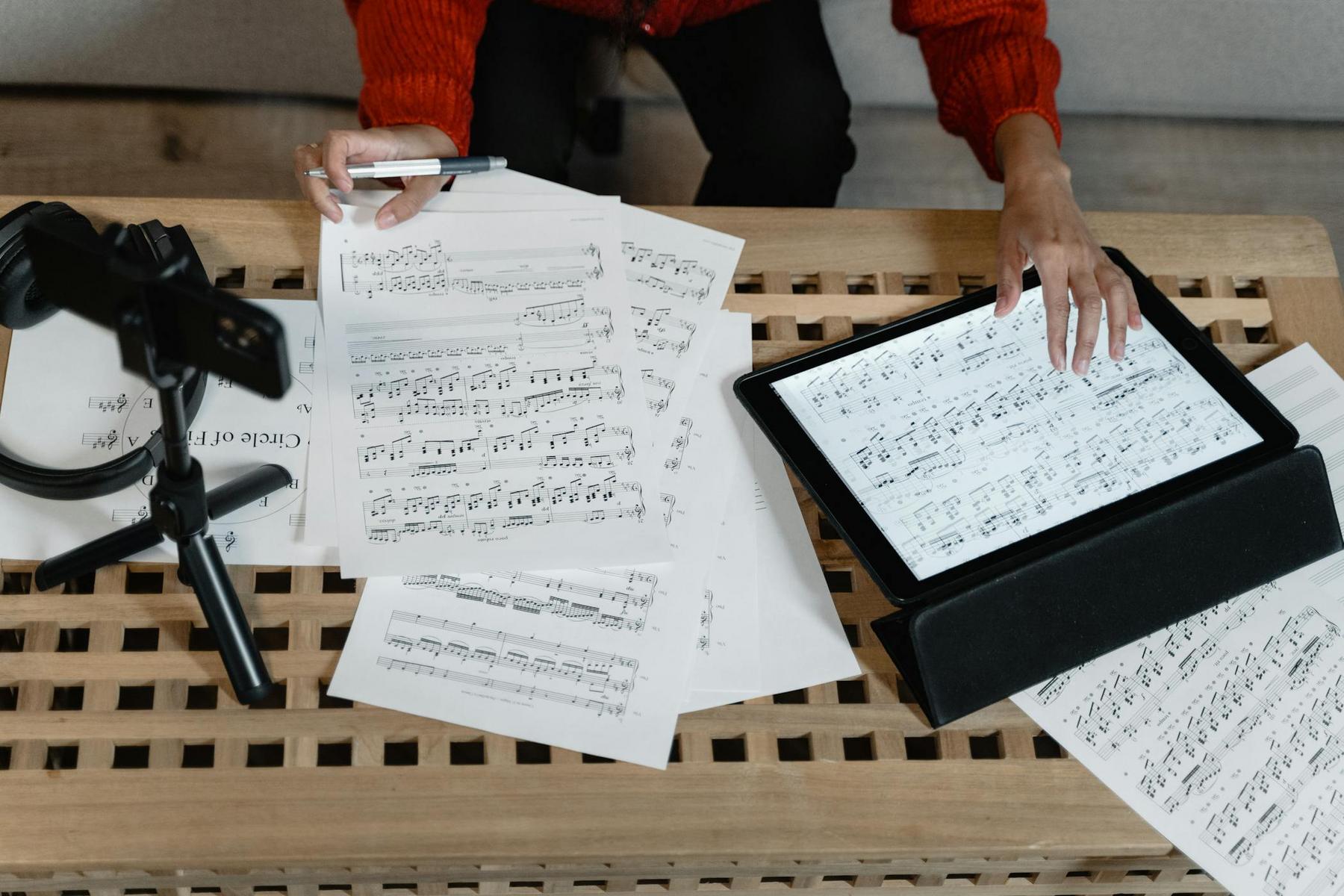
If you've ever sat at your desk—surrounded by invoices, bank statements, and a growing sense of dread—wondering whether you need a bookkeeper, an accountant, or some mythical combination of both, you're not alone. For creative professionals and small business owners across Australia, navigating the financial side of running a business can feel like trying to play a complex guitar solo without ever having learned the chords. You know the melody you want to create; you just need the right people in your band to help you play it.
At its most fundamental level, understanding the role of a bookkeeper vs. an accountant comes down to this: bookkeepers keep the records; accountants interpret them.
A bookkeeper is the backbone of your daily financial operations. They record every transaction that flows through your business—sales, purchases, expenses, and payments. Their responsibilities include managing accounts payable and receivable, reconciling bank statements, maintaining general ledgers, processing payroll (including PAYG withholding and superannuation at the current Superannuation Guarantee rate of 12%), handling Single Touch Payroll (STP) reporting to the Australian Taxation Office (ATO), and preparing and lodging Business Activity Statements (BAS) if they hold BAS agent registration with the Tax Practitioners Board (TPB).
An accountant, by contrast, operates at a higher altitude. They take the financial data that a bookkeeper has carefully recorded and use it to prepare comprehensive financial statements, manage tax compliance, lodge income tax returns, provide strategic advice on business structure, assist with budgeting and forecasting, and guide decisions around business growth and investment. Think of a bookkeeper as the session musician laying down a tight, clean track—and the accountant as the producer who takes that track and turns it into something that actually sells.
Critically, the accuracy of a bookkeeper's work directly determines the quality of an accountant's output. Messy books mean higher accountant fees, poorer strategic advice, and greater compliance risk. Clean books mean your accountant can focus on the strategic work that actually moves the needle.
In Australia, the educational bar differs significantly between the two roles—and it matters when you're choosing who to trust with your finances.
No formal degree is legally required to work as a bookkeeper in Australia. However, most professionals pursue a Certificate IV in Accounting and Bookkeeping, a Diploma of Accounting, or an Associate Degree. To provide BAS services professionally, bookkeepers must register with the TPB and hold membership with a recognised professional body such as the Institute of Certified Bookkeepers (ICB), the Association of Accounting Technicians (AAT), or the Australian Bookkeepers Association.
TPB-registered BAS agents must demonstrate a minimum of 1,400 hours of relevant experience over the past four years, hold professional indemnity insurance, and complete 45 hours of continuing professional education every three years.
Accountants must hold at minimum a bachelor's degree in accounting or a related field, and most practising accountants in Australia pursue one of three professional designations:
All three professional bodies enforce strict codes of ethics, annual continuing professional development (CPD) obligations, and compliance with the APES 110 Code of Ethics for Professional Accountants.
Cost is one of the most practical considerations when deciding which professional to engage, and the difference is significant. Here's a clear breakdown:
| Aspect | Bookkeeper | Accountant |
|---|---|---|
| Primary Focus | Day-to-day record-keeping and transactions | Strategic analysis, tax, and compliance |
| Minimum Education | Certificate IV or equivalent | Bachelor's degree + professional certification (CPA, CA, IPA) |
| Core Tasks | Transaction recording, BAS, payroll, reconciliation | Tax returns, financial statements, strategic advice |
| Typical Hourly Rate | $25–$85 per hour | $150–$800 per hour |
| Full-Time Salary Range | $50,000–$100,000 base | $73,570–$150,000+ |
| Employment Outlook (10 years) | Declining (–1,000 annually) | Growing (6.1% projected growth) |
| Can Lodge BAS | Yes (if TPB-registered) | Yes (if TPB-registered) |
| Can Prepare Tax Returns | No | Yes (if registered tax agent) |
| Professional Bodies | ICB, AAT, Australian Bookkeepers Association | CPA Australia, CA ANZ, IPA |
| Work Pattern | 60% part-time; ongoing throughout year | Often quarterly or annual, peaking at tax time |
For businesses in Penrith and greater Sydney, bookkeeper salaries generally sit $3,000–$8,000 below central Sydney rates. Outsourcing bookkeeping through an accounting firm or specialist provider—typically ranging from $1,500 to $3,000 per month—is often more cost-effective than employing an in-house bookkeeper when you factor in the full employment cost, which runs approximately 25–30% above base salary (accounting for superannuation at 12%, workers' compensation, leave entitlements, and payroll tax).
This is the question that sits at the heart of understanding the role of a bookkeeper vs. an accountant—and the honest answer is that most growing businesses need both, just at different stages and for different reasons.
A bookkeeper is your first hire when:
An accountant becomes essential when:
The most effective and cost-efficient model for small businesses is a coordinated team approach: a bookkeeper maintaining accurate, up-to-date records throughout the year, and an accountant reviewing that work, preparing tax returns, and providing strategic advice. Clean bookkeeping directly reduces the time—and therefore the fees—that an accountant spends on your file. It's the financial equivalent of delivering a well-recorded, mixed, and mastered track to a producer rather than a rough demo recorded on a mobile phone.
Cloud-based accounting platforms such as Xero, MYOB, and QuickBooks have dramatically transformed both professions. Automation now handles much of the routine, transactional work that once occupied the majority of a bookkeeper's day—bank feeds, invoice matching, and basic reconciliation are increasingly streamlined.
For bookkeepers, this shift has elevated the role. Rather than manual data entry, experienced bookkeepers now focus on compliance accuracy, GST coding, payroll integrity under STP Phase 2, and providing real-time cash flow visibility. According to Jobs and Skills Australia (2026), there are currently 91,800 bookkeepers employed nationally, with the profession projected to experience a modest decline as automation absorbs routine tasks—though demand for bookkeepers with BAS agent registration and payroll expertise remains steady.
For accountants, technology has opened the door to more frequent and strategic client engagement. With real-time financial data available year-round rather than just at tax time, forward-thinking accountants are now able to offer proactive advice on business performance rather than retrospective reporting.
Despite automation, the regulatory complexity of the Australian tax environment—BAS lodgements, GST, PAYG withholding, superannuation obligations, STP Phase 2 compliance, and payroll tax thresholds for NSW businesses (applicable above $1.2 million in annual payroll)—continues to demand skilled human professionals who understand the nuances.
For creative professionals and small businesses in Penrith and the greater Western Sydney region, understanding the difference between a bookkeeper and an accountant isn't abstract—it’s the difference between a business that thrives and one that quietly haemorrhages money through inefficiency, missed deductions, and compliance errors.
Creative businesses often have irregular income patterns, multiple revenue streams, complex GST situations, and unique deductions around equipment, home studio expenses, and professional development. These nuances require not just accurate bookkeeping but an accountant who genuinely understands the creative industry landscape.
The most financially resilient creative businesses aren't necessarily the ones earning the most—they're the ones with the clearest picture of their finances at all times, and a trusted team of financial professionals who help them make smart decisions with that information.
Understanding the role of a bookkeeper vs. an accountant is less about choosing between two competitors and more about assembling a complementary team. Bookkeepers keep the beat—recording, reconciling, reporting, and ensuring your compliance obligations never miss a deadline. Accountants compose the bigger picture—interpreting the data, planning for tax efficiency, and helping you build a business that's financially sustainable for the long haul.
For creative business owners in Penrith and Sydney, getting both roles working in harmony isn't a luxury. It's the foundation of every successful, scalable creative enterprise.
Ready to crank your finances up to 11? Let's chat about how we can amplify your profits and simplify your paperwork – contact us today.
A bookkeeper manages the day-to-day recording of financial transactions, payroll, BAS lodgements, and bank reconciliation. An accountant uses that financial data to prepare tax returns, provide strategic advice, conduct financial analysis, and assist with compliance at a higher level. Both roles are complementary, and most growing businesses benefit from engaging both professionals.
To prepare and lodge a Business Activity Statement (BAS) on behalf of a client, a bookkeeper or accountant must be registered as a BAS agent or tax agent with the Tax Practitioners Board (TPB). Always verify a professional's TPB registration before engaging them for BAS services.
Bookkeepers in the Sydney region typically charge between $25 and $85 per hour, with outsourced bookkeeping services ranging from $1,500 to $3,000 per month depending on transaction volume. Accountants charge between $150 and $800 per hour for advisory and compliance work. Business tax return preparation typically costs between $300 and $5,000 per return.
No. Whilst an experienced, TPB-registered bookkeeper can handle BAS preparation and lodgement, payroll processing, STP reporting, and routine financial record-keeping, they cannot prepare or lodge income tax returns (which requires tax agent registration), provide strategic tax planning advice, or conduct financial audits. These services require a qualified accountant registered with the appropriate professional body and the TPB.
A bookkeeper is generally the first financial professional a small creative business should engage—particularly once they are spending more than five hours per week on financial administration or have registered for GST. An accountant should be engaged at minimum annually for income tax returns and business structure review, and more frequently as the business grows, diversifies income streams, or requires strategic financial guidance.
Sign up to receive relevant advice for your business.