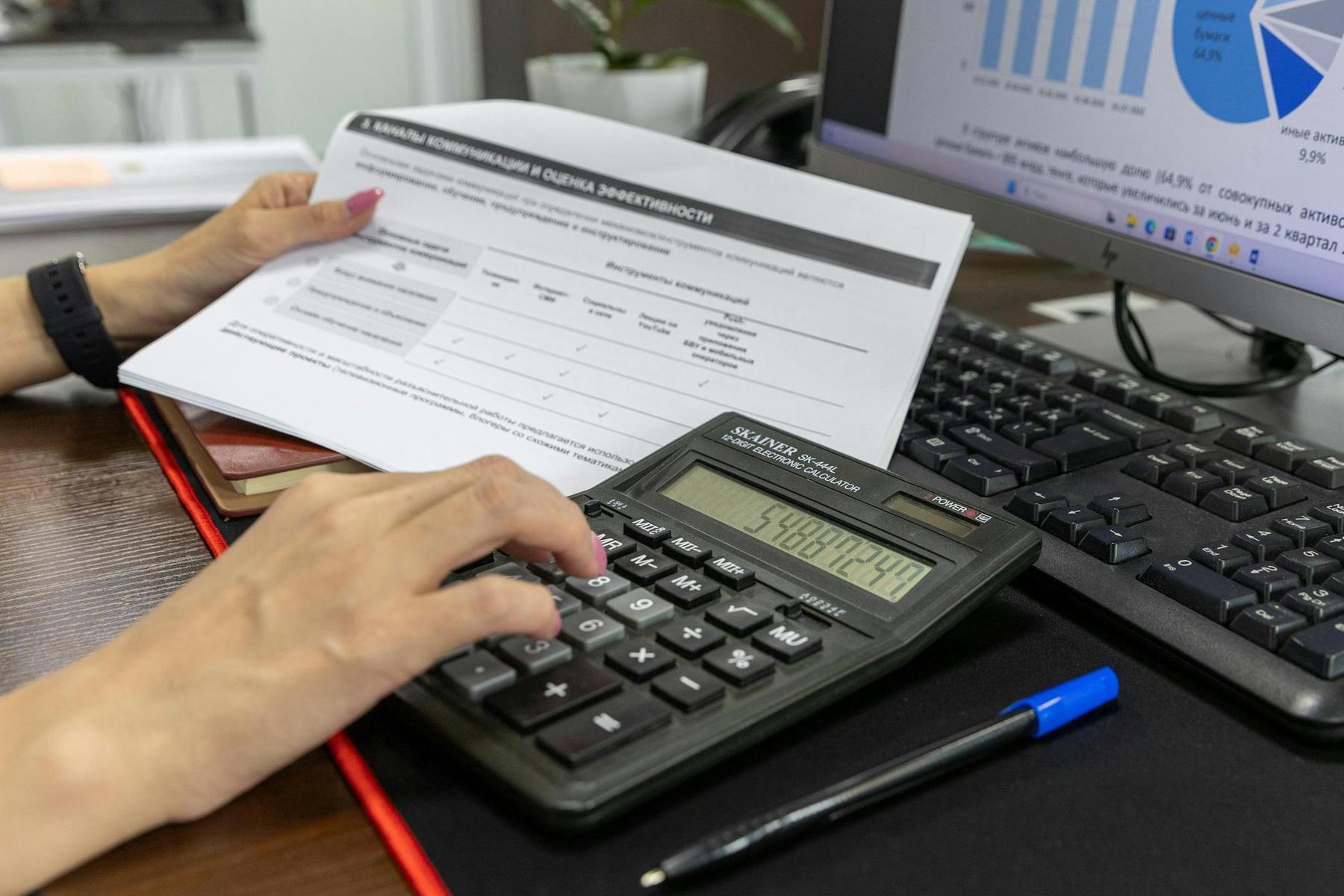
You've landed the clients, the creative work is flowing, and the revenue is building. You think to yourself - it's time to bring someone on. And honestly? That instinct might be spot on. But before you post that job ad on Seek and crack open the champagne, there's a setback most first-time employers don't see coming: the true cost of hiring your first employee in Australia is significantly higher than what it says on the salary line.
Think of it like buying a guitar. The price tag on the body is just the beginning - you still need strings, a strap, an amp, cables, a case, and someone to tune the damn thing. Hiring works the same way. Understanding the hidden costs of hiring your first employee isn't just good financial hygiene; it's the difference between sustainable growth and a cashflow crisis that throws your whole operation out of tune.
Here's the number that stops most first-time employers in their tracks: hiring your first employee typically costs 25–40% more than the advertised salary. For every dollar in annual wages, Australian businesses face an additional 25–40 cents in mandatory costs alone - and that's before you factor in Recruitment, equipment, and onboarding.
Using a $70,000 annual salary as a benchmark, the recurring annual employment cost sits at approximately $94,500, rising to around $108,900 in year one once you add setup and recruitment expenses. That's a 56% premium above the base salary in the first year alone.
The hidden costs of hiring your first employee don't materialise as a single invoice - they arrive in waves: upfront, quarterly, annually, and sometimes years down the track. Knowing what's coming is the first step to planning for it.
These aren't optional. They're the price of admission to being an employer in Australia, and missing them carries serious consequences.
From 1 July 2025, employers are required to contribute 12% of ordinary time earnings (OTE) into their employee's superannuation fund. On a $70,000 salary, that's $8,400 per year - money that must leave your account whether business is booming or quiet.
From 1 July 2026, the Payday Super reform kicks in. Gone are the quarterly payment windows. Superannuation contributions will need to be paid on each payday, with a 7-day clearing window for funds to reach the employee's account. For businesses in Penrith and across Sydney, this represents one of the most significant administrative shifts in recent payroll history. Get your systems in order before that date.
Workers' compensation is compulsory in every Australian state and territory. In New South Wales, the average premium rate through icare sits at 1.73% of annual payroll. On a $70,000 salary, that's approximately $1,210 per year. Fail to hold this cover and you're looking at fines of up to $750,000, potential imprisonment, and full liability for any claims out of your own pocket.
NSW payroll tax kicks in when total annual wages exceed $1,200,000, at a rate of 5.45% on wages above the threshold. Your first employee alone won't trigger this, but it's a hidden cost that sneaks up on growing businesses fast. A business with total wages of $1,300,000, for example, would owe $5,450 in payroll tax annually. Start planning for it before you hit the ceiling, not after.
Leave entitlements are a real and often underestimated hidden cost when hiring your first employee. Under the National Employment Standards, full-time employees accrue the following as employer liabilities:
For a $70,000 salary employee, annual leave accrual alone adds approximately $5,385 per year, while personal leave accrues at approximately $2,692 annually. These aren't just paper numbers - they're real money owed when your employee takes leave or exits the business.
Recruitment is where many employers get blindsided. The average cost to hire in Australia sits between $23,000 and $25,860 - a figure that has more than doubled since 2020. Even a lean, DIY approach still runs between $2,000 and $5,000 in direct costs.
If you engage a recruitment agency, expect to pay 15–25% of the first-year salary in agency fees. On a $70,000 role, that's $10,500 to $17,500 before the person has logged a single billable hour.
Then there's onboarding. Randstad Australia's research found that nearly 20% of employee turnover happens within the first 45 days - often directly linked to poor onboarding experiences. Investing in quality onboarding isn't a luxury; it's cost protection.
Equipment and technology set-up adds another layer: laptops, software licences, furniture, cloud tools, and security access can easily add $3,000 to $8,000+ in first-year costs - and for creative professionals, specialist software and hardware can push that figure even higher.
Here's where it all comes together. The table below breaks down the true cost of hiring your first employee in NSW, using a $70,000 salary as the reference point.
| Cost Component | Annual Amount | Notes |
|---|---|---|
| Base Salary | $70,000 | Gross wage paid to employee |
| Superannuation (12%) | $8,400 | Mandatory from 1 July 2025 |
| Workers' Compensation (1.73% NSW) | $1,210 | icare NSW average rate |
| Annual Leave Accrual (4 weeks) | $5,385 | Balance sheet liability |
| Personal Leave Accrual (10 days) | $2,692 | Balance sheet liability |
| Payroll Processing | $1,200 | Software or outsourced |
| Accounting/Compliance | $1,500 | Additional admin complexity |
| Workspace & Overhead | $2,000 | Utilities, supplies, space |
| Leave Liability & Miscellaneous | $3,613 | Contingency provision |
| Total Recurring (Year 2+) | $95,500 | ~36% above base salary |
| Recruitment Costs (one-time) | $4,000 | DIY/advertising estimate |
| Equipment Setup (one-time) | $5,500 | Hardware, software, furniture |
| Training & Onboarding (one-time) | $3,500 | Formal training and induction |
| Contracts & HR Policy Setup (one-time) | $1,500 | Legal/HR compliance |
| Total Year 1 Cost | ~$108,900 | ~56% above base salary |
Note: Payroll tax not included as NSW threshold of $1,200,000 is unlikely to be triggered by a single hire. Figures are indicative - speak with a qualified accountant for advice specific to your situation.
This is the hidden cost nobody wants to think about but absolutely must. Research indicates that employee turnover costs between 50–200% of annual salary, depending on seniority and role complexity.
For a $70,000 employee:
Direct replacement costs - recruitment, advertising, background checks - range from $14,650 to $24,900. Indirect costs - lost productivity, knowledge transfer, team disruption - add tens of thousands more. For a small creative business, losing your first employee can be genuinely destabilising.
This is precisely why the hidden costs of hiring your first employee extend well beyond the payroll ledger. Protecting your investment starts with getting the hire, the contract, and the onboarding right from day one.
Understanding the hidden costs of hiring your first employee isn't meant to scare you off - it's meant to set you up for a crescendo, not a missed chord. The businesses that grow sustainably are the ones that budget honestly, hold adequate cash reserves, and bring in the right support before they need it, not after.
Before hiring, ensure:
Hiring your first employee is one of the most meaningful milestones in a creative business's journey. When you go in with eyes open to the full cost picture, you're not just taking a risk - you're making a calculated, confident move toward something bigger.
The true cost typically runs 25–40% higher than the advertised salary. For a $70,000 role in NSW, the first-year total cost is approximately $108,900 when you include recruitment, equipment, superannuation, leave entitlements, and compliance costs.
From 1 July 2025, the Superannuation Guarantee rate is 12% of ordinary time earnings. From 1 July 2026, super contributions must be paid on each payday with a 7-day funds clearing period.
Yes. Workers' compensation insurance is mandatory in NSW. The average premium rate via icare is 1.73% of annual payroll, and non-compliance can lead to severe fines and personal liability.
Payroll tax in NSW applies when total annual wages exceed $1,200,000, at a rate of 5.45% on wages above this threshold. Typically, hiring a first employee won’t trigger this, but it’s important to plan for future growth.
Beyond the direct costs like superannuation and workers' compensation, often overlooked costs include annual and personal leave accruals, lost productivity during the ramp-up period, recruitment and onboarding expenses, equipment setup, and the significant cost of turnover if the employee leaves early.
Sign up to receive relevant advice for your business.