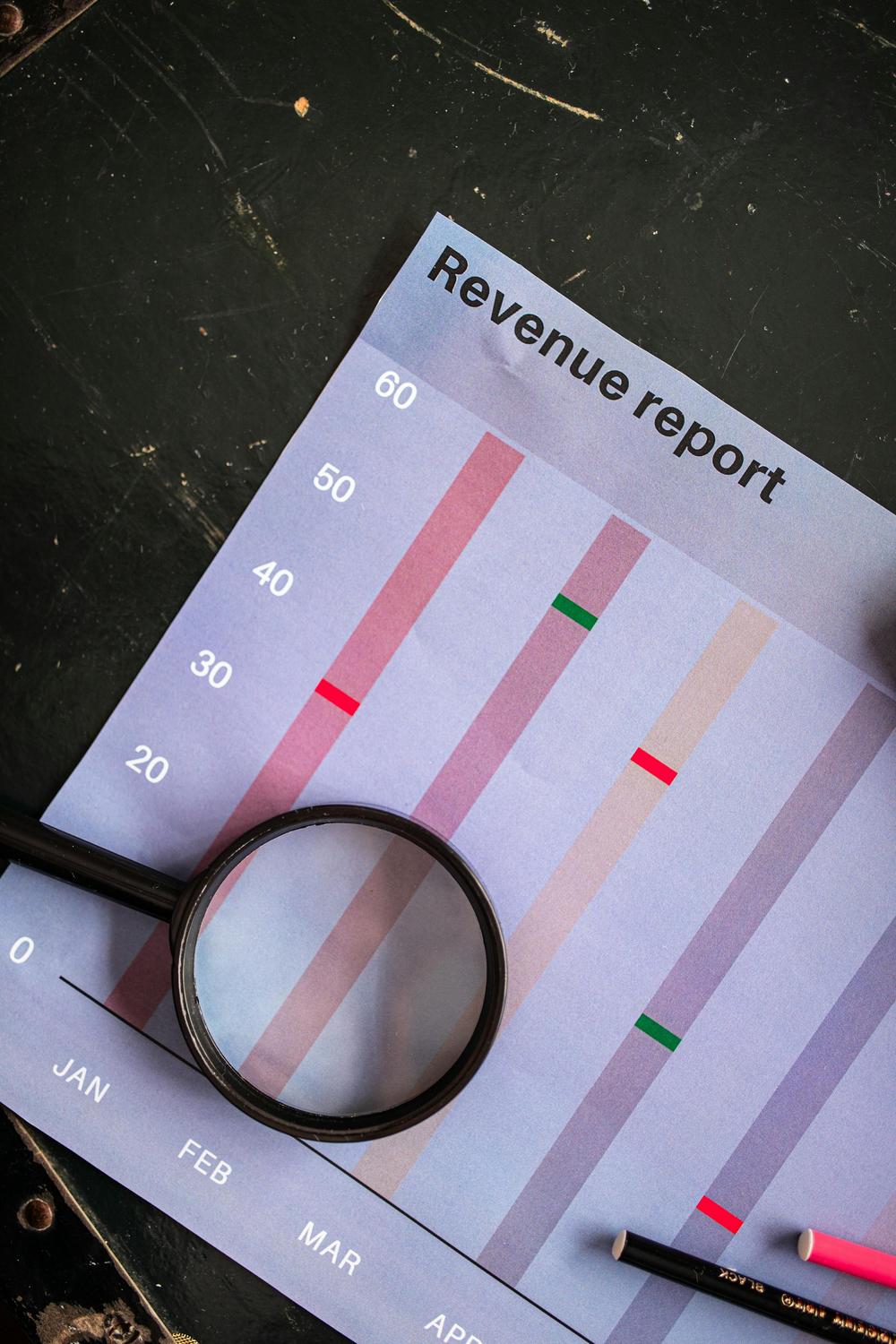
Revenue recognition might sound like accounting-speak designed to put creative professionals to sleep faster than a four-hour board meeting - but get it wrong, and your financial statements could be completely out of tune. Whether you're a Sydney-based graphic designer, a musician gigging across Penrith and beyond, or a photographer juggling multiple projects, understanding revenue recognition is one of the most important things you can do for the long-term health of your business.
At its core, revenue recognition is the accounting principle that determines when and how your business records the income it earns from selling goods or providing services.
Here's the thing - receiving cash and recognising revenue are not the same event. Under the accrual basis of accounting (which applies to most Australian businesses), revenue is recognised when it is earned - that is, when goods or services have been delivered to a customer - regardless of when payment actually lands in your bank account.
Think of it like this: if you complete a $10,000 album production project in March but the client doesn't pay until April, that revenue belongs on your March books, not April. The work was done; the performance obligation was satisfied. The cash arriving later is just the encore.
This distinction matters enormously because revenue recognition directly shapes the integrity of your financial statements. It affects how profitable your business appears to be, how your tax obligations are calculated, and how clearly investors, lenders, or the ATO can understand your financial position.
According to the Australia Council for the Arts, professional visual artists in Australia earn around 36% less than the national average, musicians around 20% less, and dancers and actors around 16% less - and much of that financial pressure is compounded when creatives mismanage their accounting foundations, including how and when revenue is recorded.
Australia operates under AASB 15: Revenue from Contracts with Customers, administered by the Australian Accounting Standards Board (AASB). This standard came into effect for annual reporting periods beginning on or after 1 January 2018 and replaced the older AASB 118 Revenue and AASB 111 Construction Contracts.
AASB 15 is directly based on IFRS 15, the international standard issued by the International Accounting Standards Board (IASB) in 2014. Its adoption ensures that Australian entities can continue claiming compliance with International Financial Reporting Standards - which is critical for businesses operating across borders or working with international clients.
For context, the United States operates under ASC 606, which was developed by the Financial Accounting Standards Board (FASB) and is largely converged with IFRS 15 - though with some notable differences.
The Australian music industry alone generated $8.78 billion in revenue during the 2023–24 period, with international exports (overseas streaming and live performances) contributing around $975 million. Proper revenue recognition under AASB 15 ensures all of that activity is reported accurately and consistently.
Both AASB 15 and IFRS 15 are built around a unified five-step framework that applies across all industries - from construction to creative services. This replaced over 100 industry-specific guidelines with a single, consistent model.
Here's how it plays out:
A valid contract must exist - whether written, verbal, or implied. The contract needs approval from all parties, clearly identifiable rights and payment terms, commercial substance, and a reasonable expectation of payment.
A performance obligation is a distinct promise to deliver a good or service. If you're a photographer selling both a shoot and post-production editing as a bundle, you may need to assess whether these are one obligation or two separate ones - depending on whether the client can benefit from each independently.
This is the amount you expect to receive for fulfilling your obligations. It includes fixed fees, but also variable elements like bonuses, penalties, refunds, or royalties. Variable consideration can only be included if it is highly probable that a significant reversal won't occur later.
When there are multiple obligations in a contract, the total price must be split proportionally - based on the standalone selling price of each component. Think of this like splitting set-list royalties across collaborating artists: everyone gets their fair share of the gate.
Revenue is recorded when control of the good or service transfers to the customer - either at a specific point in time, or progressively over time. More on this distinction below.
This is where revenue recognition gets genuinely interesting for creative professionals, and where getting it wrong can throw your whole financial picture out of sync.
Revenue recognised over time applies when any of the following conditions exist:
Revenue recognised at a point in time applies when none of the above conditions are met - typically when a clearly defined deliverable is handed over, legal title transfers, and the customer accepts the asset.
Progress toward satisfying an over-time obligation is measured using either an output method (milestones, units delivered) or an input method (hours or costs incurred). The output method is generally preferred as it more directly reflects value delivered.
For Australian creatives working with international clients - especially in the US - understanding the subtle differences between AASB 15 and ASC 606 is worth knowing. Here's a quick comparison:
| Feature | AASB 15 / IFRS 15 (Australia) | ASC 606 (USA) |
|---|---|---|
| Collectibility threshold | "More likely than not" (~50%) | "Probable" (~75–80%) |
| Contract cost capitalisation | More restrictive criteria | Broader capitalisation permitted |
| Disclosure requirements | Additional disclosures on uncertainty | Relief available in four specific situations |
| Principal vs. agent presentation | Gross or net based on control | Gross vs. net; control-focused |
| Royalties (IP licences) | Sales/usage-based exception applies | Same exception applies |
| Applicable standard body | AASB / IASB | FASB |
Understanding which standard applies to your contracts isn't just academic - it can affect both the timing and amount of revenue recognised in your financial statements.
Creative businesses face a uniquely complex revenue landscape. Multiple income streams, irregular royalty payments, variable consideration, and project-based work all create specific challenges under AASB 15.
Under IFRS 15 (and AASB 15), there is a specific exception for sales- or usage-based royalties on licences of intellectual property. Revenue is recognised when the underlying sale or usage actually occurs - meaning that streaming royalties, for example, are recorded when the streams happen, not when the platform pays out.
Performance bonuses, conditional payments, or tiered fees must be carefully estimated. Revenue from variable components can only be included to the extent it is highly probable that a significant reversal won't occur. Over-estimating variable revenue is a common - and costly - mistake.
Creative professionals frequently juggle project fees, royalties, teaching income, grants, merchandise, and digital platform earnings simultaneously. Each stream must be separately identified and recognised according to its own contractual terms and performance obligations under AASB 15.
For creatives offering subscription-based services - such as ongoing content creation or monthly retainer agreements - revenue is typically recognised ratably (evenly) across the subscription period, not as a lump sum when payment is received.
Revenue recognition isn't just a technical accounting requirement - it's the foundation of financial accuracy. When your income is recorded correctly, your profit and loss statement tells a true story. Your cash flow forecasts make sense. Your tax obligations are calculated fairly. And when it's time to scale, seek investment, or simply understand where your business stands, you're working from a reliable picture rather than a blurry snapshot.
The Australian Accounting Standards Board designed AASB 15 to bring consistency, transparency, and comparability to financial reporting - and for creative professionals navigating complex, project-based income streams, understanding these principles is non-negotiable. It's the difference between knowing your setlist and winging it on stage.
Revenue recognition refers to when income is recorded in your financial statements - which is when goods or services are delivered to a customer. Cash receipt is simply when money arrives in your account. Under accrual accounting, these two events often occur at different times, and each must be accounted for separately.
Revenue recognition in Australia is governed by AASB 15: Revenue from Contracts with Customers, which is based on IFRS 15 and has been mandatory for for-profit entities since annual periods beginning on or after 1 January 2018.
Under AASB 15, sales- or usage-based royalties for licences of intellectual property have a specific exception: revenue is recognised when the underlying sale or usage event occurs, not when the royalty payment is received. This is particularly relevant for creatives earning ongoing licensing income.
Yes, AASB 15 applies to all Australian reporting entities preparing general purpose financial statements, regardless of size. This means that even sole traders or small creative businesses must follow proper revenue recognition principles.
Incorrect revenue recognition can misstate profits, distort tax positions, undermine the accuracy of financial statements, and potentially attract scrutiny from the ATO. It also affects the ability to secure finance and accurately assess business health, emphasizing the importance of proper accounting practices.
Sign up to receive relevant advice for your business.