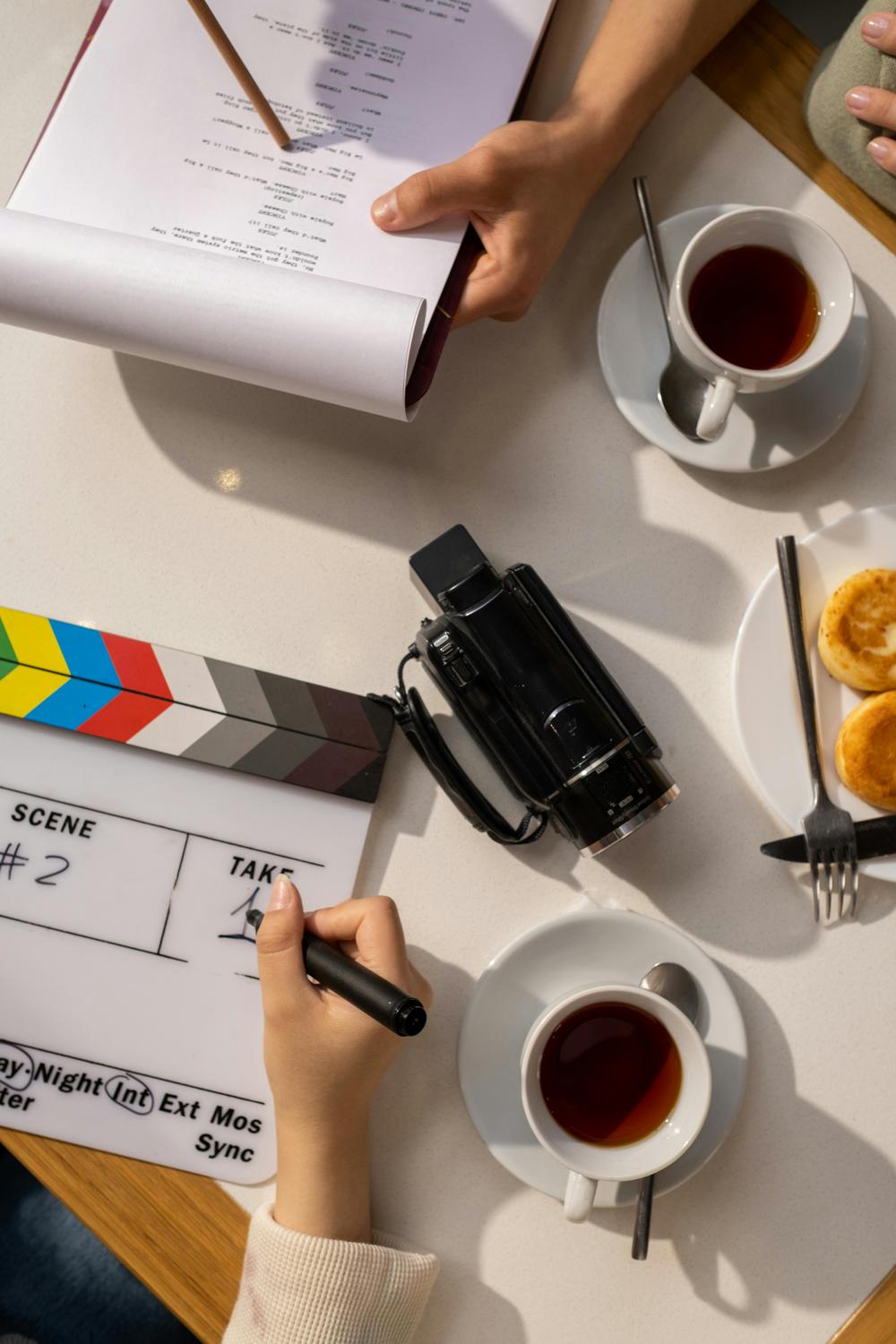
Creating art with others can feel like magic—when everyone's in harmony, the project flows, the vision clicks, and something extraordinary emerges. But behind every successful collaborative creative project sits a solid financial foundation. Without it, even the most talented partnerships can hit a bum note faster than you can say "contractual dispute."
The Australian creative industry contributed $67.4 billion to our GDP in 2023-24, with 95,753 actively trading businesses keeping the creative flame burning. Yet here's the harsh reality: 50% of Australian artists earn under $10,000 from their creative work annually, and approximately 65% of business partnerships fail due to unclear role definitions. The difference between collaborative projects that soar and those that crash? Proper financial planning from day one.
Whether you're teaming up with fellow musicians for an album, collaborating with designers on a digital campaign, or pooling creative resources for a performance piece, understanding the financial considerations for collaborative creative projects isn't optional—it’s the difference between sustainable success and creative heartbreak.
Choosing the right financial structure for your collaborative creative project is like selecting the perfect amp for your sound—get it right, and everything amplifies beautifully; get it wrong, and you're facing distortion and feedback.
General Partnerships represent the simplest option, where all partners share equal rights, responsibilities, and—here's the catch—unlimited personal liability. This works for small, informal collaborations but means each partner can legally bind the entire partnership.
Limited Liability Partnerships (LLPs) offer protection where partners aren't personally responsible for other partners' actions. This structure is gaining traction among Australian creative professionals, particularly design firms and production companies who want protection without excessive complexity.
Joint Venture Agreements suit time-limited collaborations perfectly. Working on a specific festival performance or exhibition? A joint venture provides structure without the commitment of a permanent partnership, complete with clear end dates and dissolution procedures.
For larger-scale or long-term collaborations, establishing a Company Structure provides limited liability protection and better access to funding. Yes, it's more complex and expensive to maintain (hello, ASIC compliance), but the protection and professional credibility often justify the investment.
Regardless of structure, every financial consideration for collaborative creative projects demands written agreements. Research shows that transparent financial frameworks reduce potential conflicts by 70%. These agreements must address:
Budgeting might not have the same thrill as nailing the perfect creative execution, but it's what keeps the lights on while you work your magic. Financial considerations for collaborative creative projects must include comprehensive budgeting from the first conversation.
Bottom-up budgeting works brilliantly when your scope is well-defined. Calculate costs for individual project components (labour, materials, equipment, travel) and add them up. It's more accurate but requires detailed input from everyone involved.
Top-down budgeting starts with available funds and divides the budget across deliverables. Perfect when your total budget is predetermined—though you might need to adjust scope to match reality.
For creative projects with uncertainty (and let's be honest, which collaboration doesn't have some?), three-point estimation provides insurance. Calculate best-case, worst-case, and most-likely scenarios, then average them out. Research from the Project Management Institute shows adding a 20% buffer to creative project estimates leads to more reliable delivery.
Your budget must include these essential components:
Labour and Professional Costs
Materials and Operations
Administrative and Risk Management
Real-time expense tracking separates successful collaborations from financial disasters. Teams tracking expenses as they're incurred are 63% more likely to improve processes than those doing end-of-project reconciliations. Use project management platforms like Teamwork.com, ClickUp, or Wrike integrated with accounting software like Xero or MYOB.
Implement spending alerts when costs approach budget thresholds, designate clear approval authority for different expense levels, and hold regular financial review meetings. Financial transparency isn't just good practice—it’s the foundation of trust in collaborative relationships.
Taxes might feel about as exciting as a broken string mid-performance, but understanding your obligations prevents costly surprises. The financial considerations for collaborative creative projects in Australia include several non-negotiable tax requirements.
Australian Business Number (ABN) registration is essentially mandatory for anyone invoicing clients. Without it, clients must withhold 47% of your payment—killing your cash flow faster than a power outage at a recording session. Registration is free through abr.gov.au and typically processes immediately.
Goods and Services Tax (GST) registration becomes mandatory when your annual turnover exceeds $75,000. Once registered, you must:
Your tax invoice must include the "tax invoice" label, your name and ABN, date issued, description of items/services, quantity and price, GST amount, and buyer's identity for invoices over $1,000.
Income tax obligations affect all freelance and collaborative income. The 2024-25 tax rates for residents are:
Set aside 25-35% of your income for tax obligations. If your tax liability exceeds $1,000, the ATO may enrol you in the Pay-As-You-Go (PAYG) instalment system requiring quarterly payments.
Personal Services Income (PSI) rules affect most freelance creative work. If more than 50% of your income comes from your personal skills and labour (not selling products), all income is classified as PSI. This restricts certain deductions like rent and mortgage interest for home offices, though you can still claim running expenses using the fixed rate method.
The Sharing Economy Reporting Regime means digital platforms now report all Australian freelancer payments to the ATO, regardless of amount. Keep detailed records aligned with platform reports—transparency isn't optional anymore.
Understanding tax deductions is like finding extra tracks on your favourite album—suddenly there's more value than you realised. For any expense to be deductible, you must have paid it yourself, it must directly relate to earning income, you need records to prove it, and it cannot be private or personal.
Equipment and Technology Deductions
Items under $300 provide immediate deductions. For equipment over $300, claim depreciation over the asset's useful life. Thanks to instant asset write-off provisions available through 2023-2025, eligible businesses can immediately write off assets up to $20,000 if turnover is under $10 million.
Home Office Expenses can be claimed using two methods:
The Fixed Rate Method ($0.70 per hour worked from home in 2024-25) covers electricity, internet, phone, stationery, and consumables. It's faster and simpler, requiring only total hours worked records and one receipt for each expense type.
The Actual Cost Method claims the actual work-related portion of running expenses. If your home office comprises 20% of your home, claim 20% of eligible expenses including rent (for dedicated business spaces), utilities, insurance, and depreciation. This requires detailed record-keeping but works better for large dedicated home office spaces.
Professional Development and Work-Related Expenses
What You Cannot Claim:
For a freelance graphic designer working 30 hours weekly from home, potential annual deductions might include: laptop (depreciated), Adobe Suite, home office fixed rate expenses, professional development, client meeting travel, and business phone—totaling significant legitimate deductions.
Cash flow management is the rhythm section of your financial band—get the timing wrong, and the whole performance falls apart. Financial considerations for collaborative creative projects must address cash flow from multiple angles.
Establish Clear Payment Terms Require deposits before starting work (50% upfront is common), establish Net 30 or Net 60 payment terms with clients, and use formal invoicing systems with sequential numbering. Send invoices immediately after work completion and follow up systematically on overdue payments.
For internal collaboration finances, require regular contributions from all partners for shared expenses. Maintain a separate business bank account exclusively for collaborative project expenses—mixing personal and business finances creates confusion.
Build Financial Reserves Maintain contingency funds covering 3-6 months of operational expenses. The creative industry's variable income patterns demand financial buffers. Plan for GST payment timing if registered, and factor PAYG instalment schedules into your cash flow projections.
Implement Transparent Communication Protocols Schedule regular financial review meetings (weekly or bi-weekly during active projects). Share budget status openly with all collaborators using shared financial dashboards where possible. Document all financial decisions, establish clear communication channels for financial questions, and hold end-of-project financial reconciliation meetings.
Research shows approximately 42% of partnership disputes originate from unclear contractual terms. Prevention strategies include:
When conflicts do arise, attempt direct discussion first. If that fails, engage a neutral mediator following dispute resolution procedures outlined in your partnership agreement. Document the resolution process and update agreements to prevent similar issues.
Scale Thoughtfully As collaborative projects grow, formalize your structure. Consider progression from partnership to company structure when complexity demands it. Implement sophisticated accounting software, engage professional accountants or bookkeepers, and establish comprehensive financial policies and procedures.
Risk management might not sound rock and roll, but it's what protects your assets when the unexpected strikes. Financial considerations for collaborative creative projects must include appropriate insurance coverage and risk mitigation strategies.
Public Liability Insurance protects against third-party claims for injury or property damage. If you're working in public spaces, with clients on their premises, or at events, this coverage is often mandatory.
Professional Indemnity Insurance covers errors or omissions in professional advice or services you provide. If your creative work includes recommendations that could impact client businesses, professional indemnity insurance is essential.
Equipment Insurance protects specialized creative equipment such as cameras, musical instruments, computing equipment, and other tools. Standard home and contents insurance often excludes or limits coverage for business equipment.
Income Protection Insurance covers your inability to work due to illness or injury. For creative professionals whose income depends on personal skills and labour, income protection provides a percentage of your regular income during recovery periods.
Your partnership agreement must clearly define who carries which insurance policies, coverage amounts, liability allocation among collaborators, and procedures for claims. Document insurance coverage thoroughly and ensure all collaborators understand the protection in place and any gaps requiring individual coverage.
Intellectual Property Protection Costs Budget for copyright registration protecting original creative works, trademark registration protecting brand names and logos, and potential patent protection for innovative processes. Include provisions for defending IP rights in case of infringement.
Financial Controls and Approval Processes Implement dual signatures for payments above certain amounts, clearly define approval authority for different expense levels, and separate the person requesting expenses from the approver. Regular account reconciliation, monthly financial statements, and variance analysis help maintain financial control.
The Australian creative industry's impressive $67.4 billion GDP contribution and 6.6% year-on-year growth demonstrate incredible opportunities for collaborative creative projects. Yet success demands more than talent and vision—it requires solid financial foundations.
The most successful creative collaborations treat financial considerations with the same care given to creative execution. Clear written agreements prevent 65% of partnership failures caused by unclear role definitions. Transparent financial frameworks reduce conflicts by 70%, and real-time expense tracking helps teams meet deadlines and stay on budget.
Start every collaboration with comprehensive agreements addressing ownership, profit distribution, decision-making, and dispute resolution. Choose appropriate business structures for your project’s scale and duration. Implement robust budgeting, track expenses diligently, and use integrated project management and accounting tools.
Understanding and meeting Australian tax obligations, managing cash flow effectively, and securing the right insurance are essential pillars that transform creative vision into sustainable success. Embrace these financial strategies and let your creative collaboration thrive.
Ready to crank your finances up to 11? Let's chat about how we can amplify your profits and simplify your paperwork – contact us today.
Yes, if you're invoicing for your services or contributions to the collaborative project, you need an ABN. Without one, clients must withhold 47% of your payment for tax purposes, which can severely impact your cash flow. Even in collaborative arrangements, each individual typically needs their own ABN unless a formal partnership or company structure is established.
Document profit-sharing arrangements in writing before starting work. Consider various factors such as initial capital invested, time and labor contributed, specialized skills, and ongoing responsibilities. Common approaches include equal splits, contribution-based splits, or performance-based splits. The key is to agree on a formula upfront and document it clearly in your partnership agreement to prevent disputes.
Yes, you can claim home office expenses using either the Fixed Rate Method (e.g., $0.70 per hour worked in 2024-25) or the Actual Cost Method. The Fixed Rate Method is simpler and requires records of the hours worked, while the Actual Cost Method may offer larger deductions if you have a dedicated office space.
You must register for GST when your annual turnover exceeds $75,000 (or $150,000 for non-profits). Once registered, you need to charge 10% GST on applicable invoices, lodge quarterly Business Activity Statements, and carefully track GST collected versus GST paid on business inputs.
Your recourse depends on your written partnership agreement. A well-drafted agreement will specify consequences for unmet obligations, outline procedures for partner withdrawal or buyouts, and include dispute resolution methods such as mediation or arbitration. Documenting all communications and following the agreed procedures is essential.
Sign up to receive relevant advice for your business.